River dike reinforcement - Comparative study in France
Multi-criteria analysis

- Download center
- River dike reinforcement - Comparative study in France

AskBoris
River dikes have played a key role in flood protection for centuries, but many of them were designed for water levels that are now being exceeded. Under the effects of climate change, floods are becoming more frequent and more intense, highlighting the vulnerabilities of earth dikes, particularly with regard to internal erosion and overall stability. In this context, the study adopts a sustainable approach to hydraulic infrastructure management, providing a comprehensive comparative assessment of reinforcement solutions suited to today’s challenges.
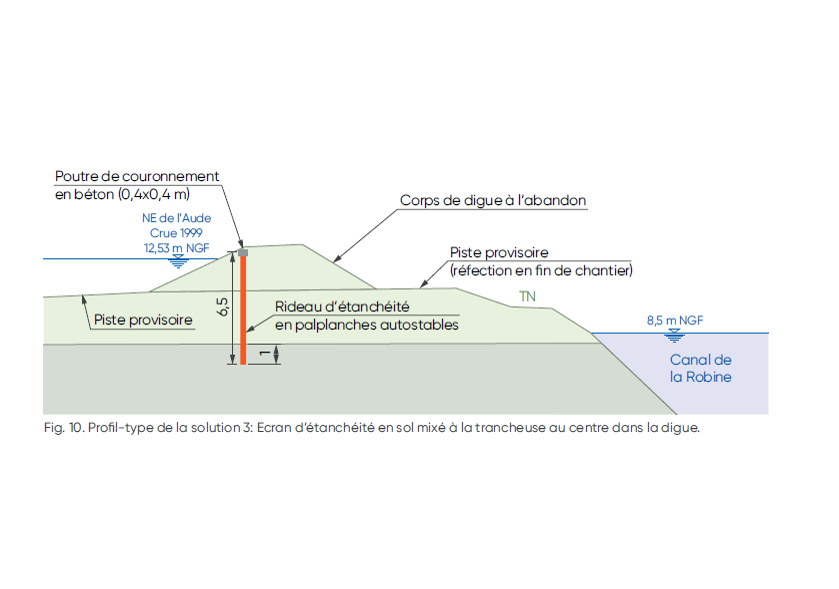
The study, carried by Egis, compares three dike‑reinforcement techniques applied to a real case study: the Canal de la Robine in southern France. The solutions assessed are dike realignment with earth embankment, cut‑off walls using cutter soil mixing, and self‑standing steel sheet pile walls. Two scenarios are considered: a reference scenario based on the 1999 flood event, and a second scenario that includes a 50 cm height increase to account for climate change. Each solution is evaluated using a multi‑criteria analysis covering technical, economic, environmental, and social aspects.
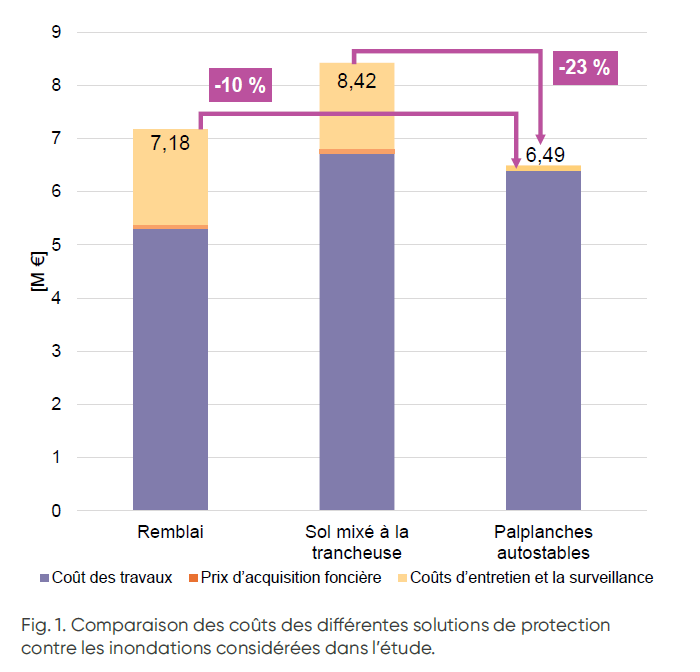
The results clearly highlight the strengths of the self‑standing steel sheet pile solution. It stands out through significantly lower overall costs (more than 20% reduction), much shorter construction timelines (up to 50% faster), and minimal land take. From a technical perspective, this solution provides high performance by ensuring both watertightness and structural stability, independently of the condition of the existing embankment. Landscape integration and social acceptance are also enhanced, as the existing dike is preserved and left in place as a non‑structural element.
From an environmental standpoint, the self‑standing steel sheet pile solution also delivers the best carbon footprint of all options studied, both during construction and over the 100‑year operation and maintenance phase. A total carbon footprint reduction of 50% is achieved over the full lifecycle. Combining durability, technical efficiency, rapid execution, and reduced environmental impact, this solution emerges as the most suitable response to current and future flood‑protection challenges, while fully aligning with a responsible and sustainable approach to river infrastructure management.
Download
 French